

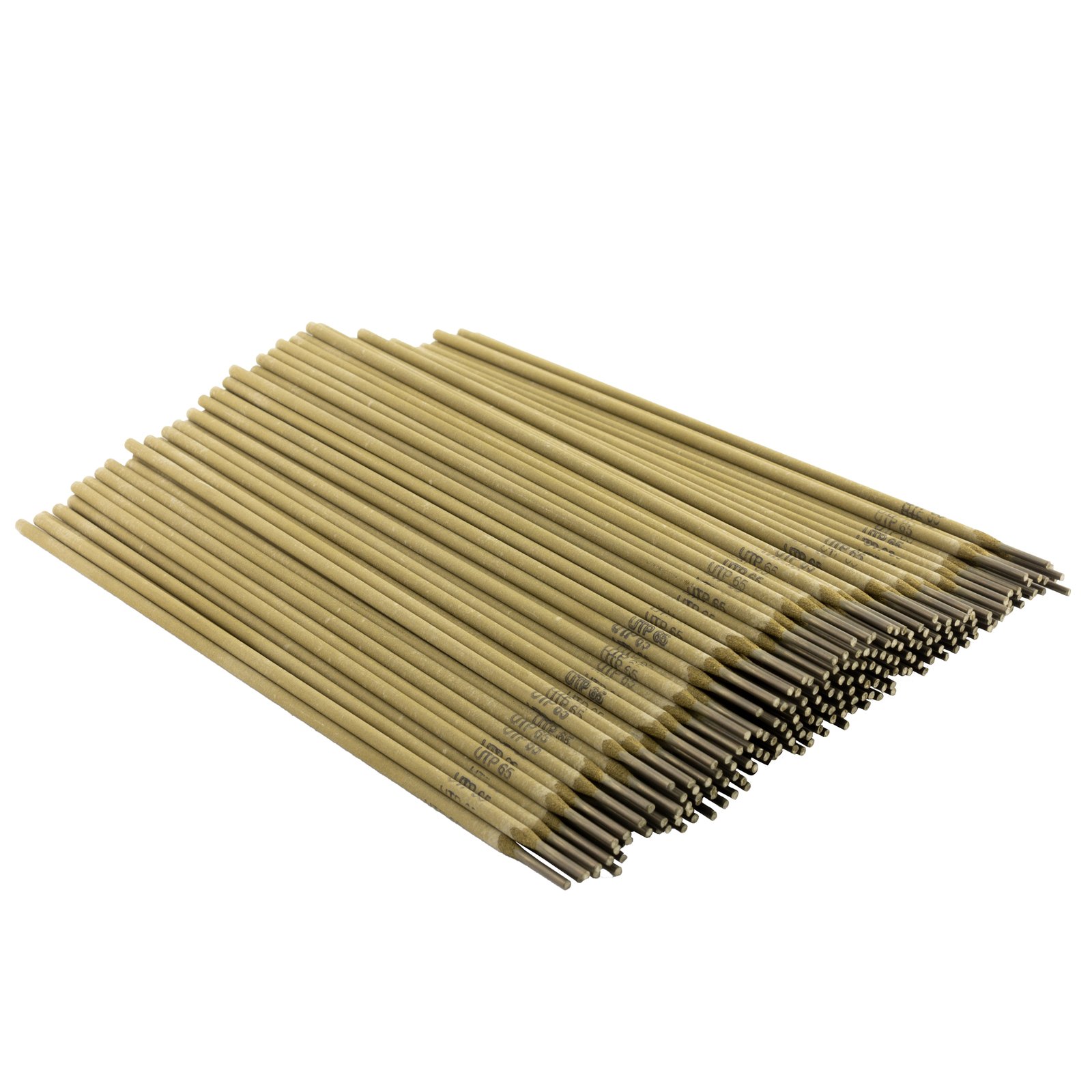




12kg 2.5mm Bohler UTP 65 Weld All 312 Stick Electrodes
$799.00
Product Introduction
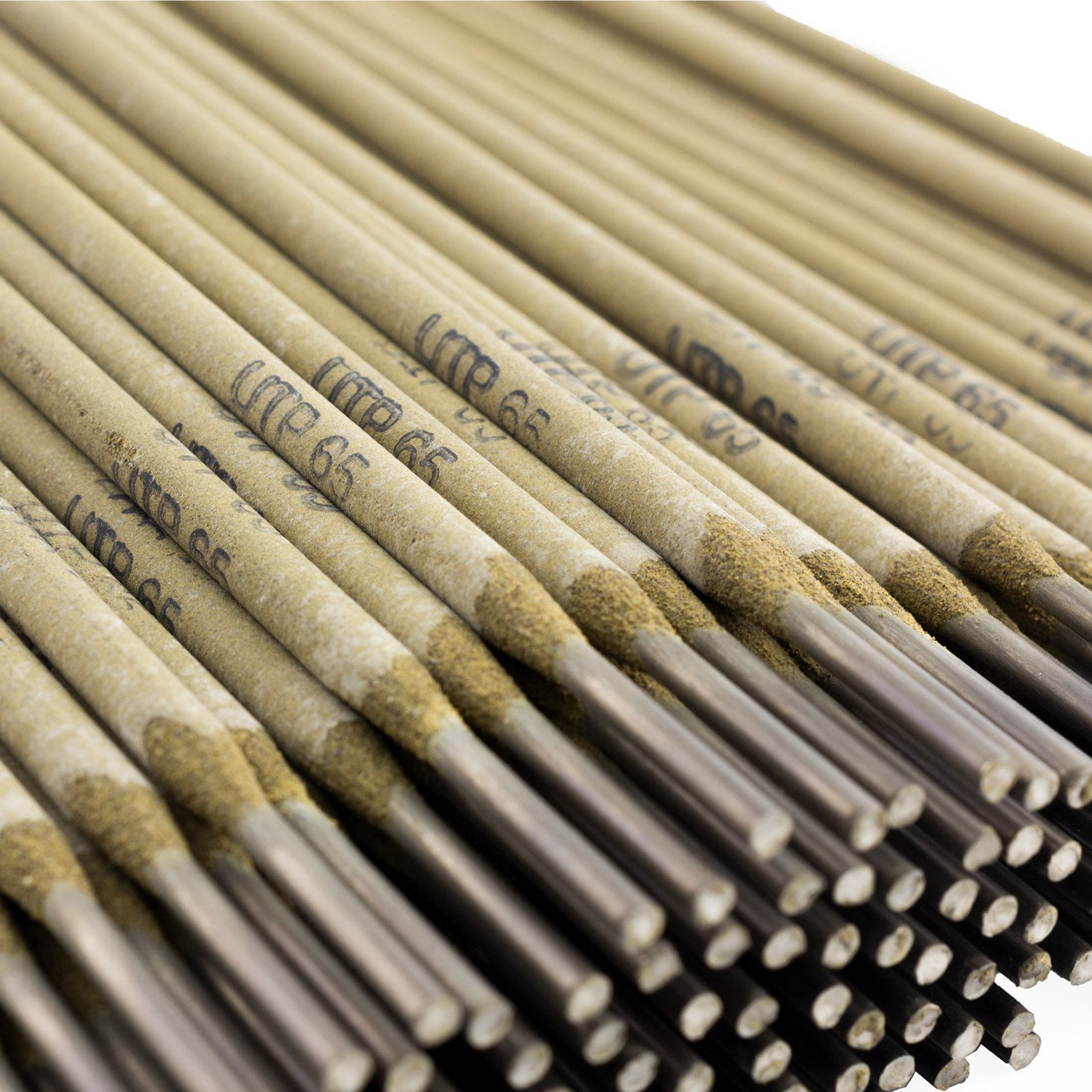
Rutile coated austenitic-ferritic special stick electrode with optimal welding and mechanical properties. Suitable for joining hardly weldable steels, repair and maintenance of machine components and tool repairing. Features smooth arc, good slag removal, high strength and crack resistance.
Product Parameters
| Thickness | 2.5mm |
| Length | 250mm |
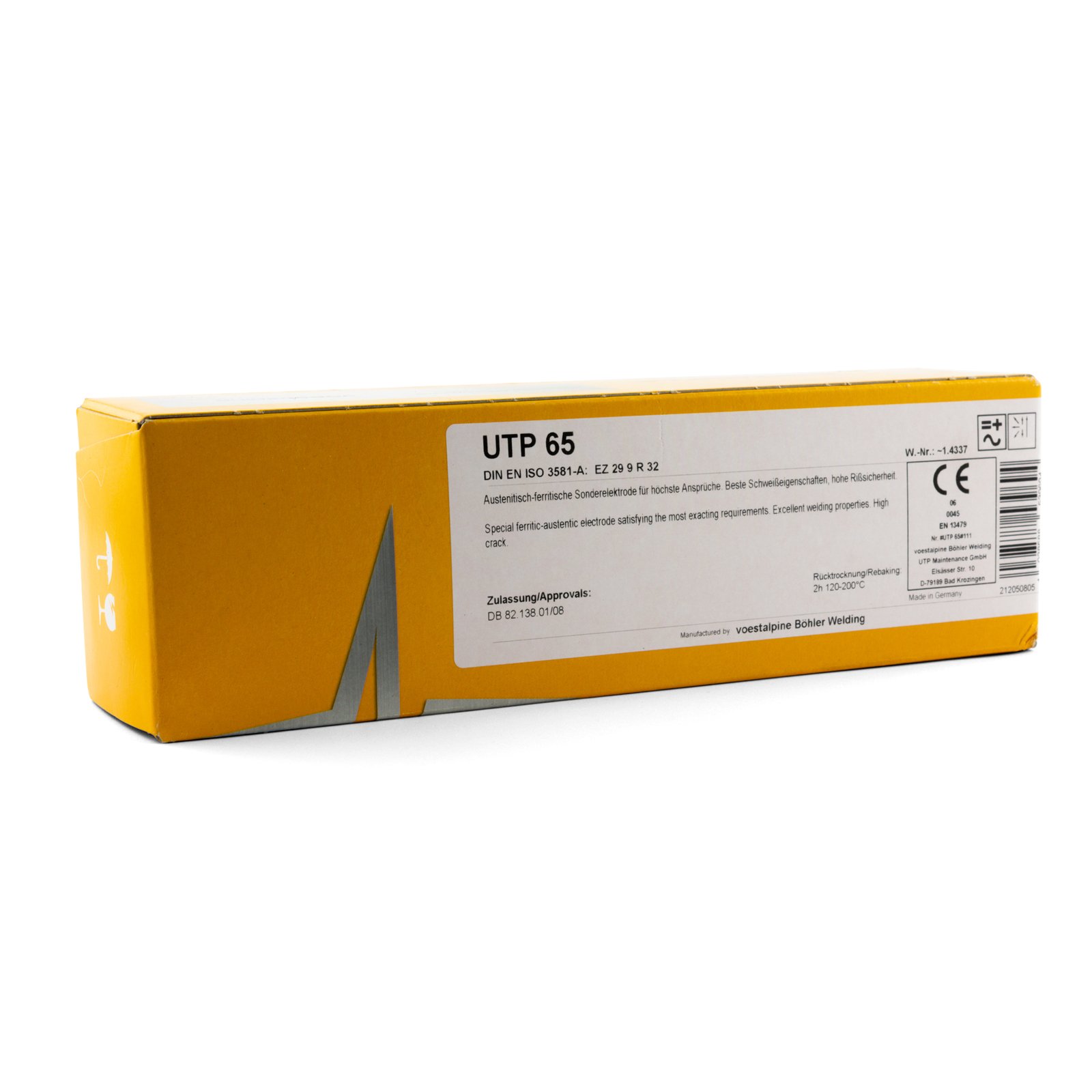
| Weight | 12kg (4 x 3kg packs) |
| Classification | E299R32 / E312 |
| Weld Metal Hardness | Approx. 240 HB |
12kg – 2.5mm Bohler UTP 65 Weld All 312 Stick Electrodes: High-Strength Welding Solution for Demanding Applications
Core Specifications
| Electrode Type | Austenitic-ferritic rutile coated stick electrode |
| Classification | E299R32 (E312 equivalent) |
| Diameter | 2.5mm |
| Length | 250mm |
| Packaging | 4 x 3kg packs (12kg total) |
| Weld Metal Hardness | Approx. 240 HB |
| Arc Performance | Smooth, stable arc with self-lifting slag |
| Weld Deposit | Stainless, work-hardening, austenitic-ferritic |
| Manufacturer | Voestalpine Bohler (UTP Maintenance) |
| Key Feature | High crack resistance & optimal mechanical properties |
Product Description
UTP 65 is a premium rutile-coated stick electrode engineered for joining hard-to-weld steels under extreme conditions. Its austenitic-ferritic composition delivers exceptional strength and crack resistance, making it ideal for critical welding tasks where structural integrity is non-negotiable. The 2.5mm diameter ensures precise control, while the 250mm length provides extended welding time for efficiency.
Core Advantages
– Superior crack resistance for dissimilar metal joining (austenitic/ferritic steels, high-manganese alloys)
– Smooth arc ignition with stable performance and easy slag removal
– High-strength weld deposits (240 HB hardness) with excellent work-hardening properties
– Versatile 2.5mm diameter suitable for both thin sections and cushion layer applications
– Convenient 12kg packaging (4x3kg packs) for bulk industrial use
Applications
– Repair/maintenance of machine components and drive systems
– Tool repairing and die fabrication
– Joining heat-treatable steels and tool steels
– Cushion layer welding on difficult-to-weld substrates
– Maintenance welding in heavy machinery and automotive industries
Performance Highlights
The electrode produces homogeneous, finely rippled weld beads with consistent penetration. Its self-lifting slag minimizes post-weld cleanup, while the austenitic-ferritic matrix ensures resistance to thermal cracking even in demanding service conditions. The weld metal maintains stability across temperature fluctuations, making it suitable for both low and high-temperature applications.
Quality Assurance
Manufactured by Voestalpine Bohler, a global leader in welding consumables, UTP 65 adheres to strict quality control standards. Each batch undergoes rigorous testing to ensure mechanical properties and arc performance meet industry specifications, providing reliable results for professional welders.
Differentiation
Unlike standard electrodes, UTP 65 excels in joining dissimilar metals with minimal preheating requirements. Its unique alloy composition bridges the gap between ferritic and austenitic steels, eliminating common issues like carbon migration and brittle fracture in critical joints.
FAQ
– Q: What base materials is UTP 65 compatible with?
A: Ideal for austenitic/ferritic steels, high-manganese alloys, heat-treatable steels, and tool steels.
– Q: Does this electrode require special storage?
A: Store in dry conditions below 50% humidity to maintain rutile coating integrity.
– Q: Can it be used for overhead welding?
A: Yes, its stable arc and slag retention make it suitable for all positions.
– Q: What current type is recommended?
A: AC or DC reverse polarity (DCEP) for optimal performance.
Ready to Elevate Your Welding Results?
For technical specifications, bulk pricing, or custom application guidance, contact our welding experts today. Experience the Bohler UTP 65 difference in your next critical welding project.