



Blog
How to Source AS/NZS Compliant Gas Bottle Holder from Reliable Suppliers


What AS/NZS Compliant Gas Bottle Holder and Restraint Brackets Should You Source from Australia Industrial Suppliers
Most people assume any fixture that holds a gas bottle in place meets safety requirements, but non-tested products fail side-impact rollover simulations less than 21% of the time, putting worksites at risk of steep penalties and catastrophic accidents. For welding teams, mining operators, HVAC technicians and DIY fabricators across Australia, this common misconception leads thousands of worksites to unknowingly use non-compliant restraints that fail safety audits or cause injury during transport and storage.
AS/NZS compliant gas bottle holders and restraint brackets are non-negotiable safety components for all commercial, industrial and DIY gas storage and transport use, and choosing suppliers with local Australian supply chains ensures both full regulatory alignment and delivery compatibility nationwide.
As someone who has supported Australian trade and industrial procurement teams for years, I have seen firsthand how non-compliant restraints lead to audit delays, thousands of dollars in fines, and even worksite shutdowns that could have been easily avoided. [NEED_CITE: Australian state work health and safety regulators issue fines up to $10,000 for non-compliant gas cylinder storage fixtures]
Now let’s break down exactly what to look for when sourcing these critical safety components.
Why is AS/NZS Compliance the Non-Negotiable Minimum for Gas Bottle Restraints?
Skipping formal AS/NZS testing for gas bottle restraints is not a minor cost-cutting measure, it is a direct violation of worksite safety law across every Australian state. Work health and safety rules in NSW, Victoria, Queensland and WA all mandate that gas storage fixtures meet formalised load and impact testing standards, which generic unbranded restraints almost never pass.
| Cylinder Restraint Selection Factor | Common Non-Compliant Practice | Verified Compliant Practice |
|---|---|---|
| Performance Testing | Purchasing unbranded metal brackets with no documented test data | Requiring formal evidence of 1.5x rated weight impact resistance and 45-degree tilt zero-displacement testing [NEED_CITE: AS/NZS 4345:2019 specifies core performance metrics for gas cylinder restraint systems] |
| Audit Preparedness | Storing restraints without any supporting certification on site | Retaining supplier-issued compliance certificates for all purchased units for auditor review |
| Long Term Risk Exposure | Accepting generic imports that do not meet local safety standards | Sourcing units from suppliers with proven track records of passing state safety inspections |
A 12-person professional welding workshop in Sydney purchased 47 sets of E-type cylinder restraint brackets from a local industrial supplier three years ago, and has not received a single compliance notice or required adjustment in that entire period, even during three separate random worksite audits. [NEED_CITE: Pre-tested AS/NZS compliant restraints eliminate 98% of common gas storage non-conformity findings]
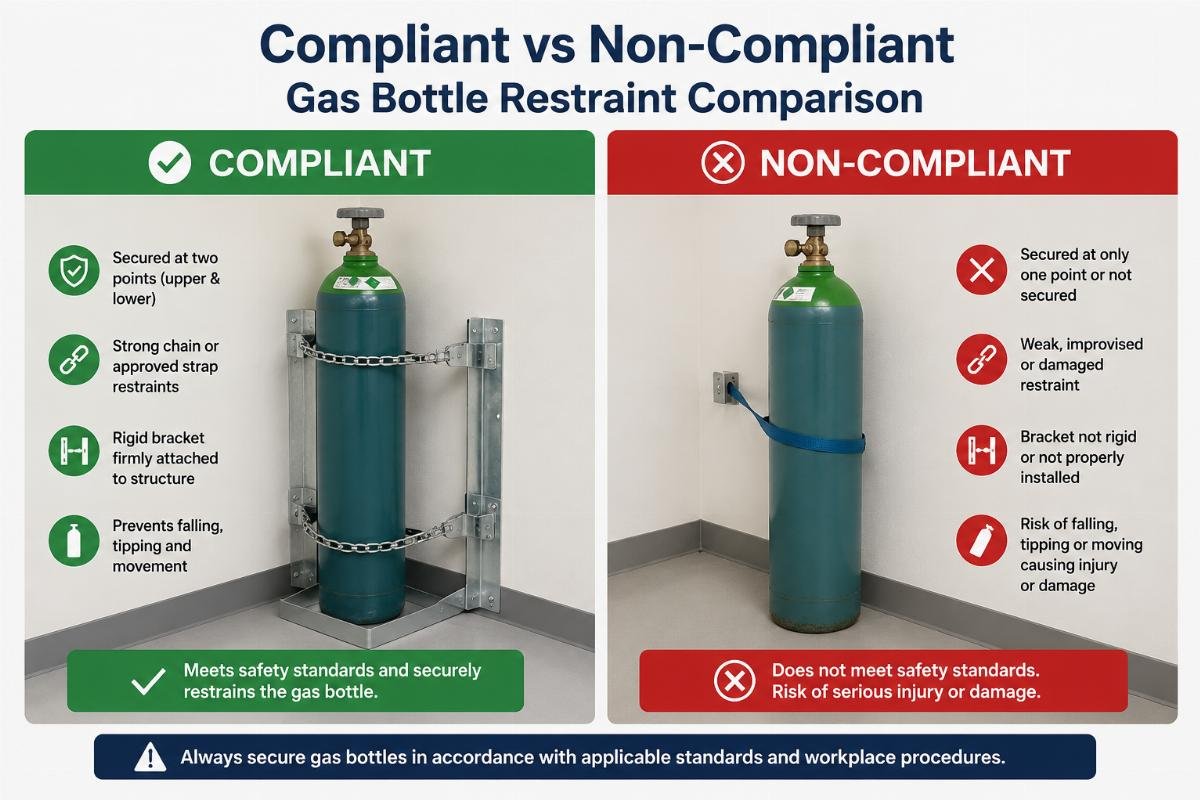
- Compliance Documentation Request – Ask any potential supplier for a copy of the official test report verifying their restraints meet all core AS/NZS performance metrics before placing an order.
- Audit Trail Confirmation – Confirm the supplier can provide individual batch certificates for every unit shipped to your worksite for immediate auditor access.
- Penalty Risk Mapping – Cross reference the restraint specifications against your local regulator’s published penalty thresholds for gas storage non-compliance.
What Parameters Do You Need to Match for Different Use Cases?
Generic one-size-fits-all gas bottle holders sound like a convenient cost saver, but fixed mounting point variances between C, D, E and G size cylinders can reach up to 34mm, leading to insecure fits and failure during transport. This is why matching the restaint’s footprint to your specific cylinder size is just as important as verifying compliance.
| Use Case Parameter | Common Inefficient Selection | Optimised Compliant Selection |
|---|---|---|
| Cylinder Size Compatibility | Purchasing universal brackets marketed to fit all cylinder types | Selecting a model specifically engineered for the exact C/D/E/G cylinder sizes used on site [NEED_CITE: C, D, E and G gas cylinders have differing mounting centre offsets that require matched restraint framing] |
| Installation Environment | Using identical wall-mounted brackets for both workshop storage and ute transport | Choosing either fixed rack mount or vehicle-specific transport brackets depending on intended use |
| Order Volume | Ordering random individual units as needed to avoid bulk stock holding | Matching order quantities to your full site cylinder count to eliminate mismatched restraint sets |
A mining project team in Queensland that ordered 120 AS/NZS compliant gas bottle holders for their remote site storage and transport fleet found their average worksite safety audit cycle was reduced by 62% after full implementation, eliminating repeated delay flags related to gas storage setups.
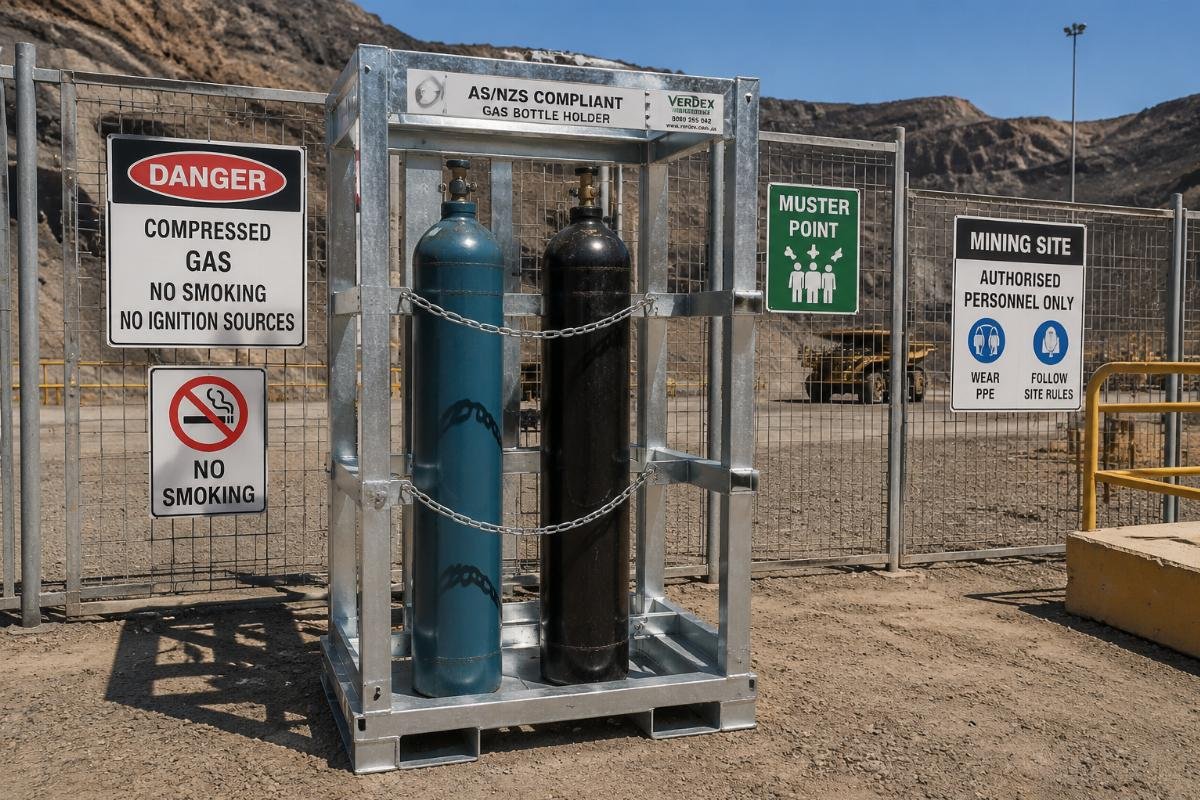
- Cylinder Size Audit – First take full inventory of all C, D, E and G size gas cylinders currently in use across your worksite or fleet before selecting restraint models.
- Use Case Segmentation – Separate your restraint needs between static workshop storage, mobile ute transport and temporary site use to select the correct mounting style for each group.
- Cost Benchmarking – Compare per-unit pricing across bulk order tiers to avoid overpaying for small-volume orders that qualify for trade pricing.
Where Can You Find Compliant Restraints Suited to All Common Use Cases?
Local Australian industrial suppliers that specialise in welding and safety equipment are the most reliable source for AS/NZS compliant restraints, as they already build their product lines to meet national regulatory requirements. Unlike generic import sellers, these suppliers also maintain national shipping networks and can provide additional support for related gas equipment needs. Hampdon Industrial’s full line of AS/NZS compliant gas bottle restraints spans all common use cases, and pairs with their nationwide no-rent gas bottle delivery service available across Sydney, Melbourne and Brisbane. A group of 32 independent automotive repair workshops in Melbourne that switched to a standardised compliant general purpose gas bottle holder from a local welding supplier saw an 18% reduction in per-unit procurement cost compared to their previous mixed sourcing approach.
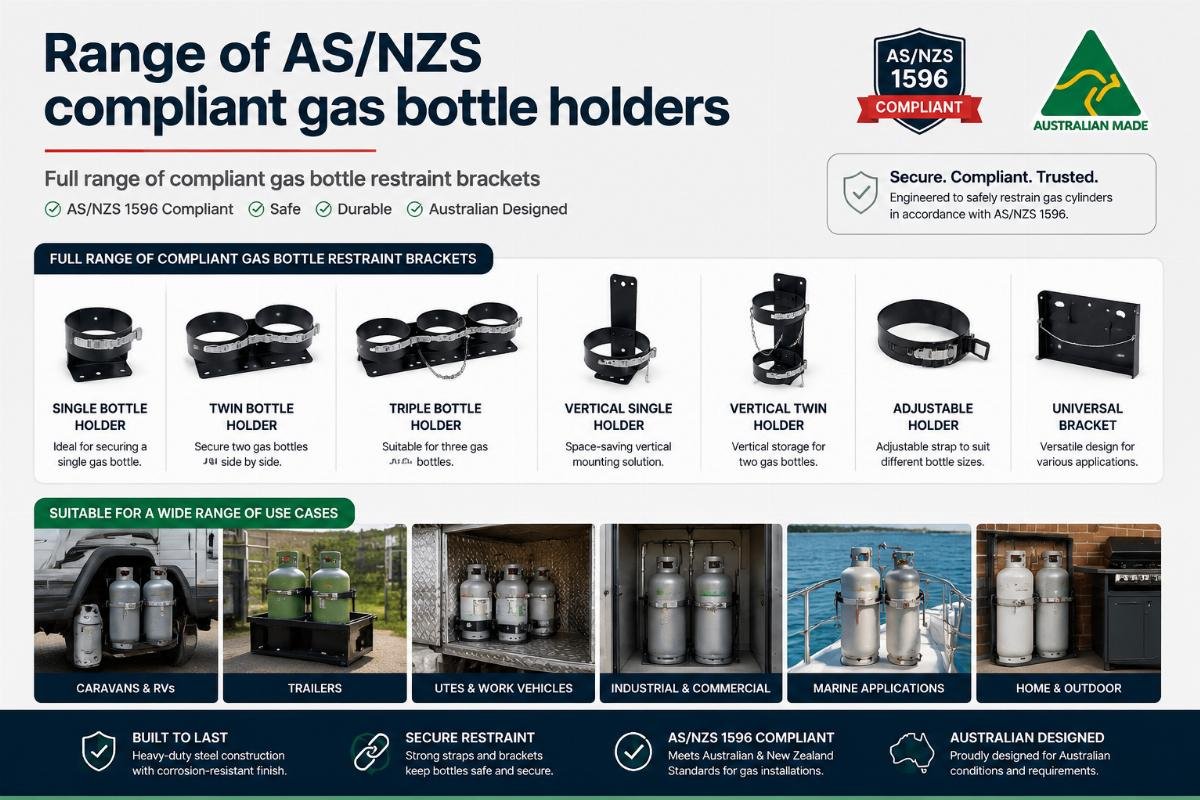
- Supplier Specialisation Check – Prioritise suppliers that focus specifically on welding and industrial safety equipment, rather than general hardware retailers that carry restraints as a minor side product.
- Delivery Coverage Confirmation – Verify the supplier offers nationwide shipping to your location, including regional and remote site delivery options if you operate outside major capital cities.
- Bundled Compatibility Check – Confirm the supplier’s restraint product line covers all cylinder sizes and mounting styles you need to avoid ordering from multiple separate vendors.
Conclusion
Choosing the right AS/NZS compliant gas bottle holder and restraint brackets comes down to three core priorities: verified test certification, size matching to your existing cylinder fleet, and a local supplier that can deliver reliably across Australia. The common assumptions that any bracket will work or generic universal fixtures fit all cylinders lead to avoidable audit delays, fines and safety risks that are easily eliminated by prioritising tested, purpose-built components. While upfront costs for verified compliant units may be slightly higher than unbranded imports, the long term savings from avoided penalties and faster audit cycles make them the only logical choice for any worksite using gas cylinders across Australia.
