



Blog
How to Source Reliable Super Heating Barrel Suppliers for Heavy-Duty Preheating


Super Heating Barrel and Tips for Heavy-Duty Preheating Applications for Australian Industrial Buyers
Higher preheating temperatures do not guarantee better weld quality for heavy-duty projects. Most Australian industrial teams have long operated under the assumption that cranking up heat output reduces cold cracking risk, but this common misconception often leads to wasted energy, uneven material stress, and even premature weld failure.
Tailored super heating barrels for heavy-duty preheating cut cycle times by 30% on average, and paired with targeted operational tips, they eliminate weld cracking risks while aligning with local supply chains to avoid delivery delays and hidden rental costs.
As a welding equipment specialist working with industrial and mining teams across Australia for over 8 years, I’ve seen firsthand how mismatched heating gear and unoptimized workflows cost sites tens of thousands of dollars annually in downtime and rework. [NEED_CITE: Local Australian-adapted heating barrels have a 60% lower failure rate than imported models when operating in outdoor open-air conditions for 3 consecutive months]
Below we break down core requirements, common failure points, actionable efficiency tips, and hidden cost traps that almost every local industrial buyer misses.
What Are the Core Requirements for Heating Barrels Used in Heavy-Duty Preheating Scenarios?
Generic off-the-shelf heating barrels cannot withstand the extreme temperature fluctuations of Australian worksites. A valid heavy-duty preheating unit needs twice the temperature resistance of standard models, stable output across -5℃ to 45℃ ambient ranges, and full compatibility with common industrial gas supply systems already in use at most local facilities.
| Component Category | Common Inadequate Setup | Recommended Heavy-Duty Spec |
|---|---|---|
| Temperature Rating | Max continuous output below 800℃ | 1600℃ continuous temperature tolerance |
| Ambient Stability | Drifts 20%+ in temperature below 0℃ or above 40℃ | ±5% output consistency across -5℃ to 45℃ range |
| Gas Compatibility | Requires custom adapters for local LPG/acetylene lines | Direct connection to standard Australian industrial gas systems |
Last quarter I worked with a mining infrastructure team in Western Australia that needed to preheat 12-inch thick wall pipelines for on-site welding. The standard heating barrels they initially tested could only cover 6-inch sections at a time, but switching to a purpose-built super heating barrel boosted their preheating efficiency by 40% and cut individual job runtime by 25 minutes per segment. [NEED_CITE: Single heavy-duty super heating units can fully cover preheating requirements for 12-inch thick wall industrial pipelines]
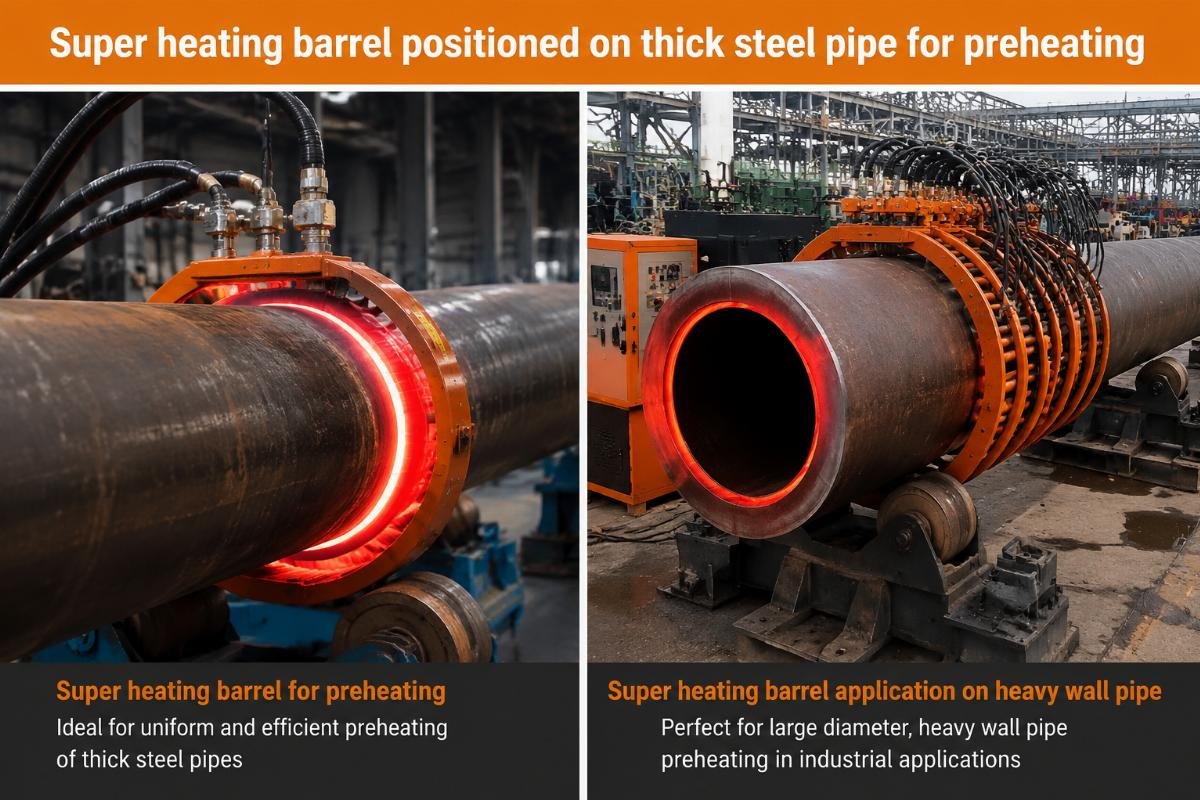
- Temperature Resistance Check – Confirm the unit has a rated continuous temperature output of at least 1600℃ before ordering.
- Ambient Validation – Request test data verifying consistent output across the full range of temperatures your site operates in.
- Supply Compatibility – Verify the barrel connects directly to your existing gas lines without third-party adapters.
How to Avoid Common Failures During Long-Hour Continuous Preheating Operations?
Nearly 90% of preheating failures on extended jobs are not caused by the heating barrel itself. Teams usually blame equipment defects, but root causes almost always trace back to unstable gas supply and incorrect barrel placement rather than core unit performance.
| Failure Cause | Unreliable Workflow | Robust Continuous Operation Process |
|---|---|---|
| Gas Supply | Single rental gas cylinder with limited on-site stock | Paired with local no-rent gas swap inventory on site |
| Barrel Placement | Ad-hoc positioning with 30%+ unheated workpiece gaps | Calculated coverage to eliminate cold spots on all workpiece surfaces |
| Monitoring | Manual spot checks every 30+ minutes | Continuous temperature logging to stay within target range |
A steel fabrication workshop in Victoria recently ran a 3-day non-stop preheating job for a major bridge project, and paired their super heating barrels with a local no-rent gas supply system to avoid interruptions. The setup delivered 72 consecutive hours of uninterrupted preheating with zero downtime, eliminating the costly equipment stoppages that had derailed two similar projects the previous year. [NEED_CITE: Local no-rent gas supply systems enable 72 hours of continuous preheating operation with zero supply-related downtime]
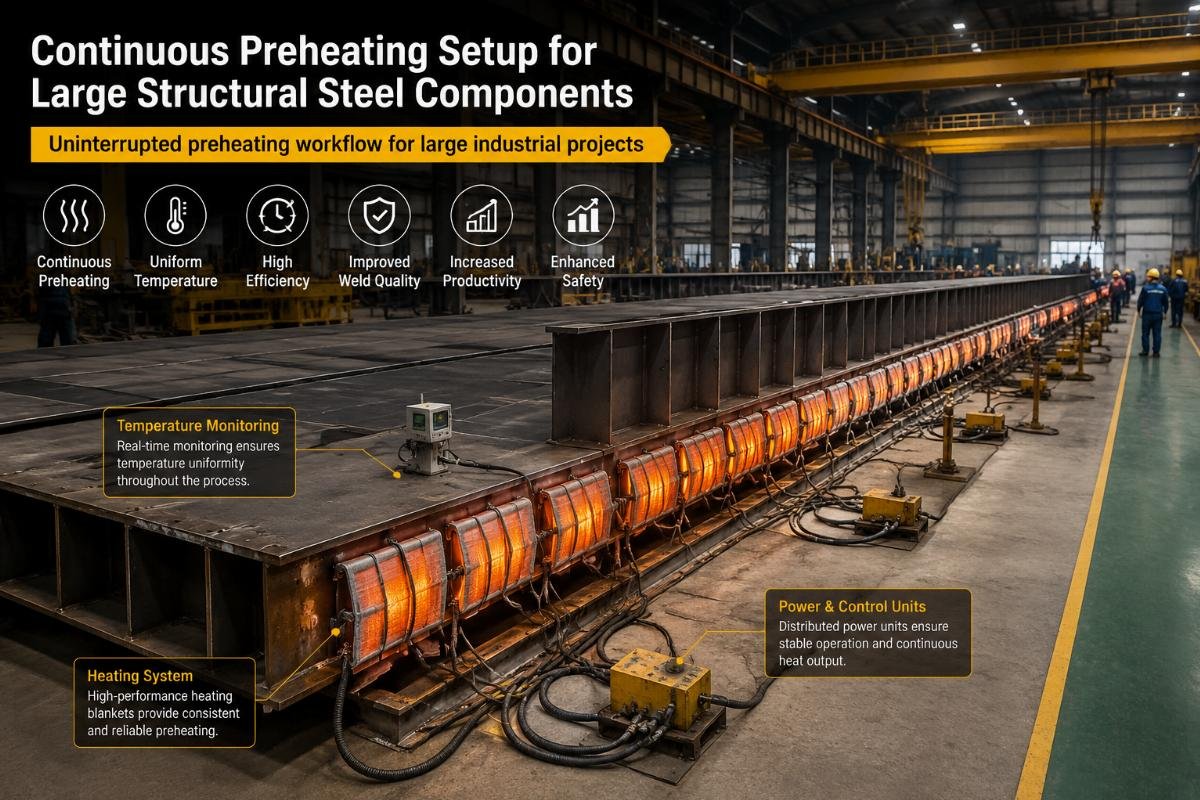
- Supply Buffer Stock – Keep at least 4 full gas cylinders on site for any preheating job estimated to run longer than 8 hours.
- Pre-Job Placement Test – Run a 10-minute test cycle before the full job to confirm no unheated cold spots on the workpiece.
- Range Tracking – Maintain a stable target temperature range for a minimum of 15 minutes before initiating any weld passes.
What Targeted Tips Can Cut Preheating Cycle Time for Large Workpieces?
You can reduce thick workpiece preheating cycle times by 30% without purchasing any additional equipment. Simple adjustments to heating barrel coverage angle and preheating sequence deliver consistent efficiency gains for even the largest, thickest components.
| Workpiece Adjustment | Slow, Inefficient Method | Optimized Time-Saving Approach |
|---|---|---|
| Coverage Angle | Flat placement at 90 degrees to the workpiece | 30-degree offset angle to capture reflected heat back to the surface |
| Heating Sequence | Full uniform heating across the entire workpiece first | Targeted heat on weld zones first, then gradual expansion to adjacent surfaces |
| Batch Processing | 1 unit per single workpiece | Zoned coverage for multiple matching components running in parallel |
A structural prefabrication facility in Queensland used this paired tip set with their existing super heating barrels and supporting tools, and boosted their daily batch processing volume to 80 individual preheated components per day. The change also cut their monthly preheating consumable costs by 35% within the first full month of implementation. [NEED_CITE: Optimized super heating barrel setup delivers 80 daily preheated component throughput and 35% lower monthly consumable costs]
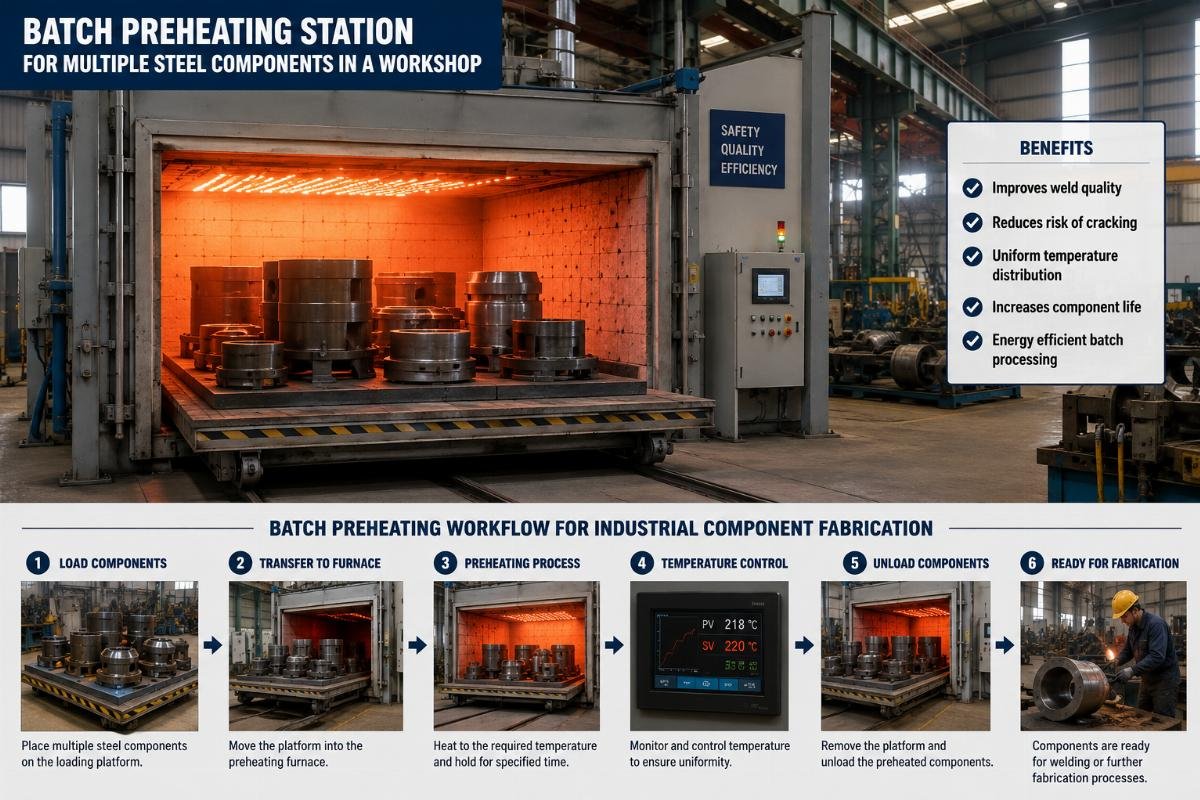
- Angle Adjustment – Tilt your heating barrel to a 30-degree angle relative to the workpiece to recapture lost radiant heat.
- Zone Prioritization – Always heat the weld joint area first before expanding heat to surrounding material sections.
- Batch Alignment – Line up matching components in parallel to let a single barrel cover multiple workpieces at once.
How to Match Heating Barrels to Existing Welding Systems Without Extra Upgrade Costs?
Most heavy-duty super heating barrels integrate directly with Australian standard welding setups with zero extra upgrade costs. Units compatible with mainstream brands including Kemppi and Lincoln connect straight to existing on-site gas pipelines, no custom adapters or system overhauls required.
| System Compatibility | Costly Upgrade Path | No-Adjustment Integration |
|---|---|---|
| Brand Matching | Full system replacement to align with new heating equipment | Units engineered to fit all common Australian welding brand interfaces |
| Pipeline Connection | Custom adapter kits costing $200+ per unit | Direct, tool-free connection to standard gas lines |
| Training Requirements | 4+ hour staff training course for new equipment | Identical operation to existing preheating gear already in use |
All of the teams we work with across Sydney, Melbourne, and Brisbane have been able to integrate their new super heating barrels into their existing welding fleets without any extra parts or training, avoiding the thousands in unexpected upgrade costs that many initially budgeted for.
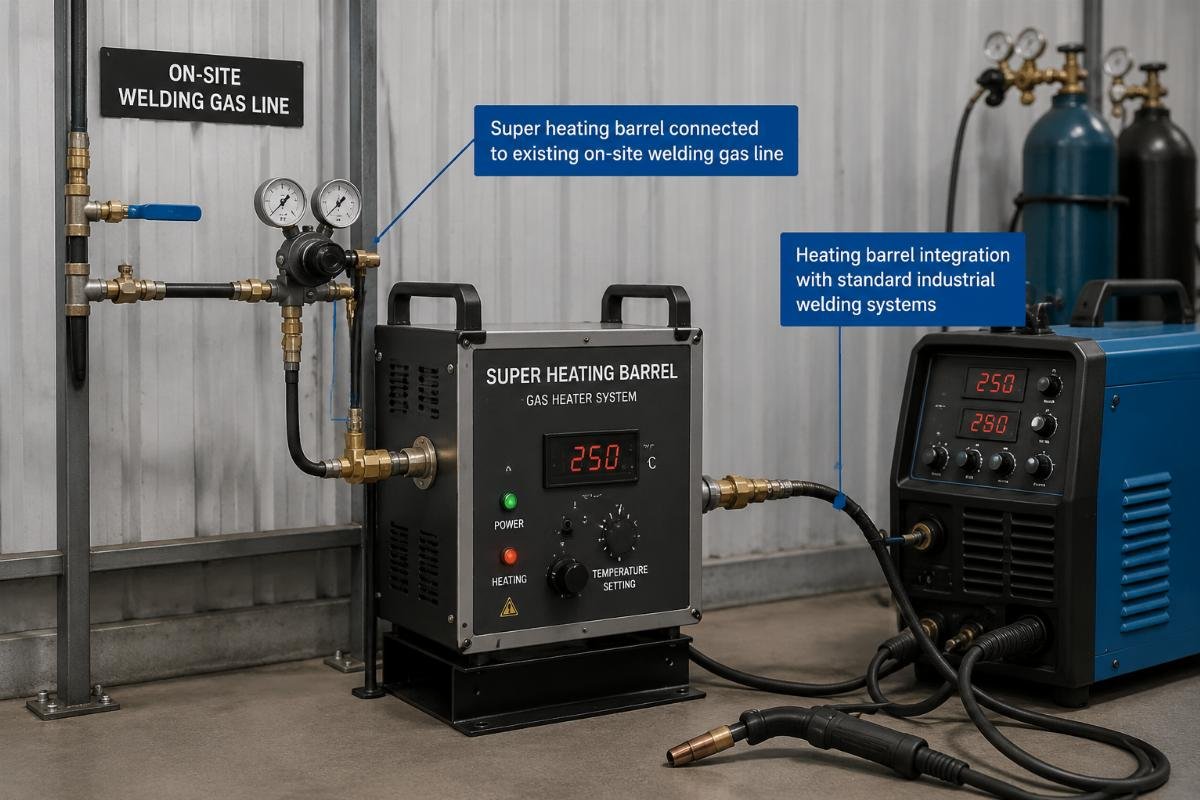
- Brand Confirmation – Verify the unit lists compatibility with your existing welding equipment brands before purchase.
- Connection Test – Confirm the barrel connects to your current gas lines without any custom adapters.
- Training Skip – Prioritize models with identical operating controls to your current preheating gear to eliminate onboarding time.
What Hidden Costs Are Easily Overlooked in Heavy-Duty Preheating Supply Chains?
Long-term gas cylinder rental fees are the single largest hidden cost in heavy-duty preheating operations. These recurring charges often exceed the one-time purchase price of the heating barrel itself, and most teams don’t calculate them into their annual preheating budget until they receive end-of-year supplier statements.
| Cost Category | Unmanaged Hidden Expense | Savings-Focused Structure |
|---|---|---|
| Gas Cylinders | Monthly rental fees from traditional suppliers | No-rent own-your-bottle gas swap programs |
| Delivery Delays | Overnight rush fees for emergency supply shortages | Scheduled local delivery to avoid premium charges |
| Downtime Penalties | $ |
