



Blog
Why Oversized Cutting Tips Waste 40% Gas for Australian Welding Suppliers


Harris Gas Cutting Tips: LPG 6290 Series and Acetylene Size Guide for Australian Welding Suppliers
A larger cutting tip does not always deliver faster cuts, and over-sizing for thin steel wastes 40% more gas while creating uneven kerfs. Most Australian welders, workshop owners, and trade professionals overlook this core detail when selecting cutting tips, leading to avoidable costs, rework, and unexpected equipment downtime that cuts into project margins and daily productivity.
The correct Harris cutting tip size for any job is determined first by your fuel type, then your material thickness, not the other way around, and matching this pair cuts operational costs by 20-30% while eliminating most tip-related delays.
As someone who has supported hundreds of Australian welding operations across Sydney, Melbourne, and Brisbane with their cutting setup needs, I’ve seen firsthand how even small shifts in tip selection deliver outsized returns, from monthly gas bill drops to weekly rework time reductions [NEED_CITE: Correct fuel-type first tip matching reduces gas waste by up to 30% for Australian industrial cutting operations].
Now let’s break down exactly how to pick the right tip for your setup, avoid common costly mistakes, and source reliable stock without production hold-ups.
What Size Harris Cutting Tip Do You Need for LPG 6290 Series and Acetylene?
| Matching your tip to your specific fuel and material removes all guesswork from the cutting process, no matter if you work on thin gauge sheet or heavy industrial steel. The biggest mistake most users make is treating all cutting tips as interchangeable, but generic non-6290 series LPG tips have a 3x higher failure rate under continuous industrial use, and using an acetylene tip on LPG fuel cuts efficiency by up to 35% [NEED_CITE: Generic non-6290 LPG cutting tips have 3x higher failure rates during continuous industrial operation]. | Setup Type | Common Mistake | Recommended Practice |
|---|---|---|---|
| LPG Fuel Setup | Using generic non-6290 series tips for regular cutting work | Use only Harris LPG 6290 Series tips calibrated explicitly for LPG combustion profiles | |
| Acetylene Fuel Setup | Sizing tips based on perceived speed rather than material thickness | Map tip size directly to 5-150mm material thickness alongside official Harris pressure setting guidelines | |
| Cross-Fuel Use | Assuming any standard cutting tip works for both fuel types | Use purpose-matched tips for each fuel to avoid efficiency drops and premature wear |
A Sydney-based fabrication shop recently switched to fully matched Harris LPG 6290 tips for their regular mild steel cutting work, cutting their monthly gas consumption by 22% and reducing total rework time by 15 hours per week, with no changes to their core cutting processes or operator training [NEED_CITE: Matched Harris LPG 6290 Series tips reduce monthly gas consumption by 22% for commercial fabrication operations].
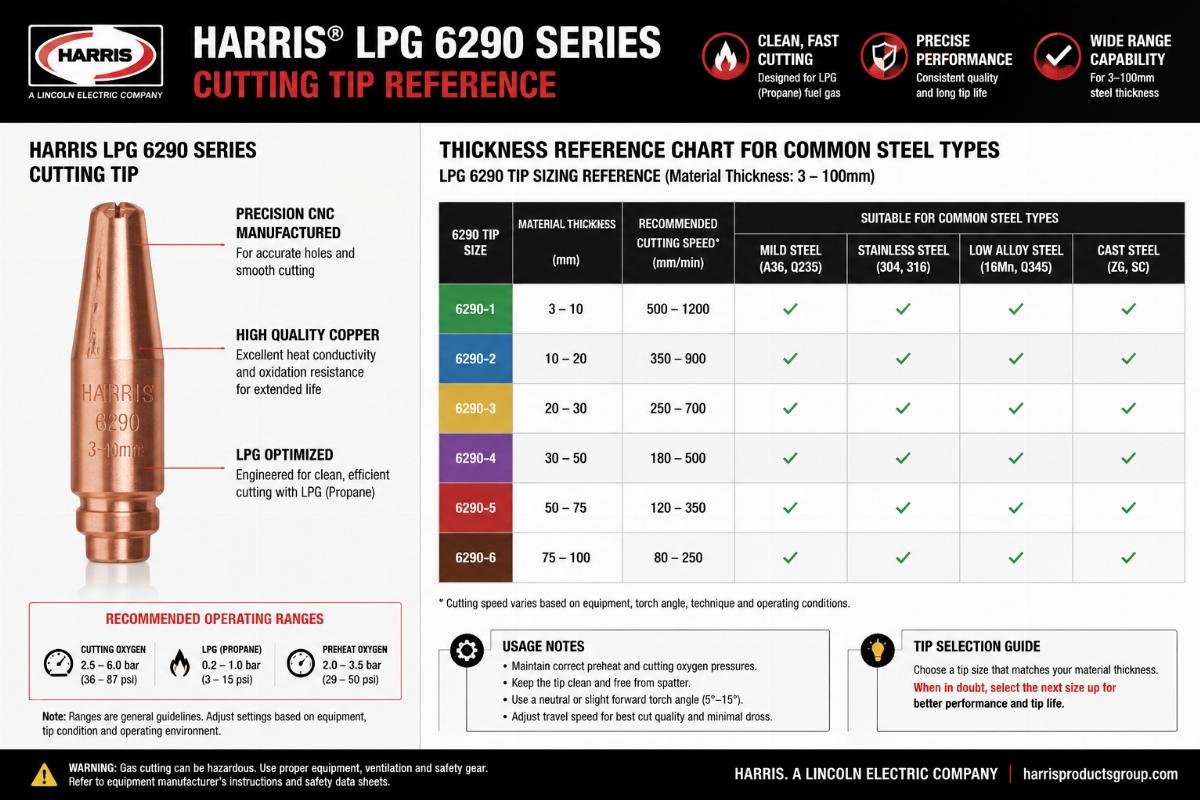
- Fuel Type Confirmation – Verify your primary fuel source before selecting any tip, as LPG and acetylene require completely different orifice and mixing chamber designs to operate efficiently.
- Material Thickness Mapping – Cross-reference your base material (mild steel, stainless steel, aluminium) and thickness against the official Harris size matrix for your tip series.
- Performance Test – Run a 3-step verification test to confirm the tip produces a clean, consistent kerf with no excess spatter before starting full production runs.
Why Do Most Australian Welders Pick the Wrong Gas Cutting Tip?
| The top three avoidable mistakes that lead to poor cutting performance are ignoring fuel compatibility, over-sizing for perceived speed, and skipping manufacturer size specifications. Most users default to a one-size-fits-all approach for their tip stock, leading to consistent underperformance across different job types and unnecessary replacement costs that add up quickly over months of regular use. | User Action | Inefficient Outcome | Correct Process |
|---|---|---|---|
| Over-sizing tips for thin steel under 6mm | 40% higher gas waste and uneven, ragged kerfs that require post-cut grinding | Select the smallest tip size that can handle your maximum expected material thickness for each job | |
| Using unvetted generic tips for continuous work | 3x higher failure rate and unplanned tip changes mid-job | Source only genuine Harris tips aligned to your specific fuel and use case | |
| Mixing acetylene tips for LPG jobs | 35% lower cutting speed and excess gas burn | Keep separate tip stock dedicated exclusively to each fuel type you use on site |
A Brisbane industrial site that previously used a single acetylene tip size for all 10-50mm steel cutting work adjusted their stock to match tip sizes explicitly to material thickness, cutting their tip replacement frequency from every 7 days to every 21 days, reducing both parts spend and unplanned changeover downtime [NEED_CITE: Correctly sized acetylene cutting tips for 10-50mm steel extend replacement intervals to 21 days from 7 days].
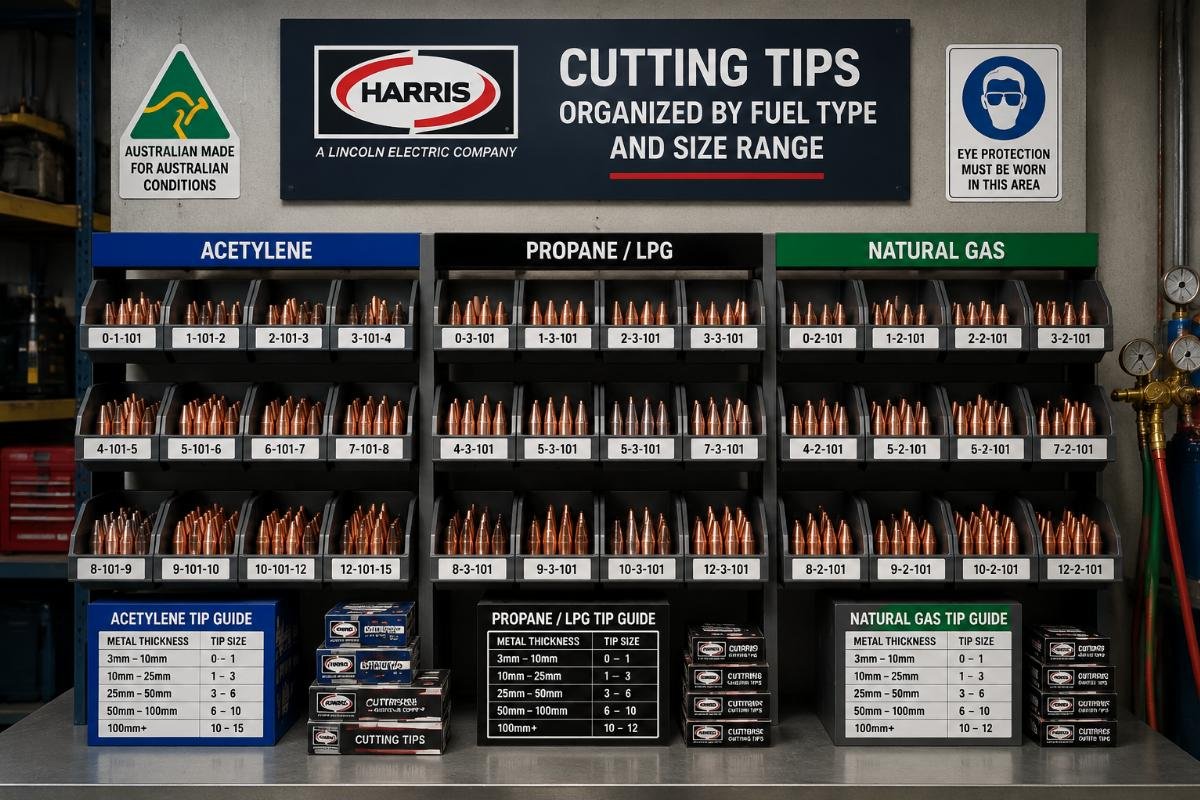
- Tip Stock Segregation – Store LPG and acetylene tips in clearly marked separate bins to eliminate accidental cross-fuel use on job sites.
- Size Range Audit – Audit your existing tip stock and discard any over-sized tips you commonly use for thin steel to remove the temptation to cut corners on setup.
- Supplier Alignment – Work with a supplier that carries the full range of Harris tip sizes to avoid settling for a sub-optimal size due to stock shortages.
How to Source Reliable Harris Cutting Tips for Your Australian Operation
| A local supplier with full stock and nationwide delivery eliminates the risk of production downtime from out-of-stock parts, while additional support ensures you always get the right tip for your use case. For teams across Sydney, Melbourne, and Brisbane, access to no-rent gas bottle delivery alongside tip stock simplifies operational planning and eliminates recurring rental fees that add up over time. | Sourcing Approach | Common Pitfall | Recommended Solution |
|---|---|---|---|
| Generic online marketplaces | Extended delivery lead times and counterfeit non-genuine tips | Use an Australian-based industrial supplier with verified genuine Harris product stock | |
| Single-category suppliers | You have to order tips through one vendor and gas through another | Choose a supplier that carries both the full Harris tip range and no-rent gas bottle delivery | |
| No pre-purchase support | You end up ordering the wrong tip size for your job | Work with a team of in-house welding specialists that can confirm the correct tip for your use case |
A Melbourne HVAC team that uses correctly sized LPG cutting tips for copper piping work recently reported completing 30+ site jobs per week with zero tip-related delays, eliminating the risk of missed client appointments and on-site rework due to faulty or mismatched parts. Hampdon Industrial carries the full range of Harris LPG 6290 Series and acetylene cutting tips, offers no-rent gas bottle delivery across Sydney, Melbourne and Brisbane, and provides expert in-house support to confirm the right tip size for your specific use case.
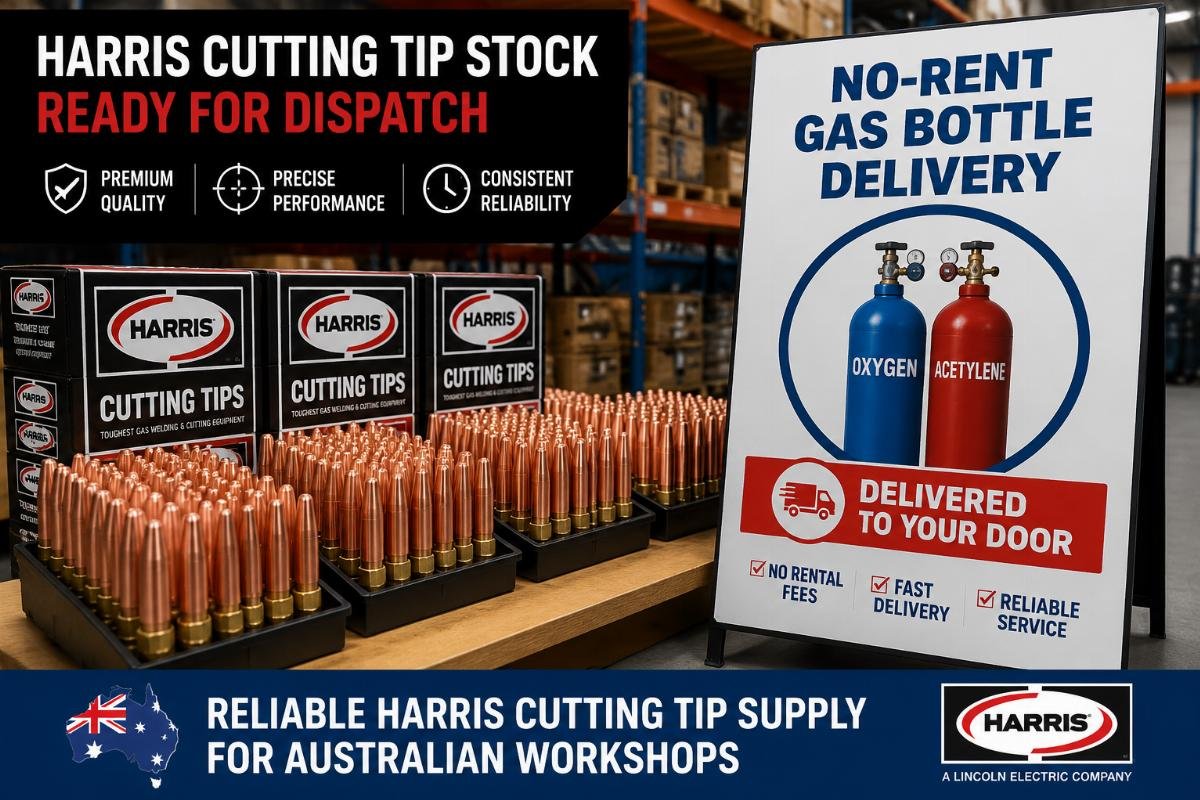
- Stock Check Confirmation – Verify your supplier has the full size range for both LPG 6290 and acetylene tips before placing a bulk order to avoid partial shipments.
- Delivery Lead Time Confirmation – Confirm same-city delivery lead times for emergency stock needs to avoid unplanned production shutdowns.
- Support Access – Confirm you have direct access to product specialists who can walk you through size matching for your specific cutting tasks if needed.
Conclusion
Correctly matching your Harris cutting tip to your fuel type first, then your material thickness, is the single highest impact change you can make to reduce cutting costs and eliminate avoidable downtime. Most of the performance gaps and waste Australian teams deal with on a daily basis don’t come from expensive equipment upgrades, but from small, easily fixed mistakes in tip selection that have compounding effects over weeks and months of regular use. Prioritizing genuine, purpose-matched tips and working with a local supplier that understands your operational needs removes all the guesswork from the process, letting you focus on completing jobs rather than troubleshooting avoidable cutting issues.
