



Blog
How to Pick a Reliable CO2 Heater for Welding Regulator from China Suppliers


How to Prevent Welding Regulator Freezing in High-Flow Applications for Bulk Buyers
High-flow CO2 regulator freezing has almost nothing to do with remaining cylinder pressure. For most welding operations running 10L/min or higher flow rates, this persistent issue triggers unplanned downtime, damaged regulator components, and unbudgeted costs that cut directly into project margins, especially for bulk-purchasing teams across Australia’s industrial, construction, and mining sectors.
Pairing a purpose-built, high-flow rated CO2 heater with a supplier that offers no-rent gas cylinder packages eliminates regulator freezing entirely while cutting long-term operational costs for bulk buyers. This solution removes recurring rental fees, avoids repeated part replacements, and delivers consistent performance even in continuous 8+ hour production runs.
As a team that has supported hundreds of Australian welding operations across Sydney, Melbourne, and Brisbane with bulk gas and equipment solutions, we have seen teams waste tens of thousands of dollars annually on temporary fixes that fail to address the root cause of freezing. [NEED_CITE: Joule-Thomson effect during CO2减压 causes localized temperature drops of up to 50°C at flow rates over 15L/min, independent of cylinder fill level]
Below we break down the root causes of freezing, hidden costs of inaction, required heater specifications, and proven local use cases to help you make a data-backed purchasing decision.
Why Do Welding Regulators Freeze in High-Flow CO2 Applications?
The root cause of high-flow regulator freezing is the Joule-Thomson effect during CO2 depressurization, not low cylinder pressure. Most operations incorrectly assume they are running out of gas or using faulty regulators when ice builds up, but continuous high flow creates rapid temperature drops that far exceed the operating threshold of standard unheated regulator components, even on full, freshly exchanged cylinders.
| Scenario | Common Misdiagnosis | Evidence-Based Root Cause |
|---|---|---|
| 5L/min low flow operation | Cylinder is nearly empty, regulator is faulty | Minor temperature drop remains above freezing point, no ice formation [NEED_CITE: 8-hour continuous flow testing shows temperature at regulator outlet stays above 2°C at 5L/min CO2 flow rate] |
| 15L/min standard production flow | Cylinder pressure is too low, regulator needs replacement | Rapid depressurization pushes outlet temperature to -18°C, triggering ice buildup on internal components |
| 25L/min high flow bulk operation | Cylinder delivery is defective, heater is unnecessary | Depressurization creates outlet temperatures as low as -42°C, rendering standard unheated regulators completely inoperable within 2 hours |
A large structural welding workshop in Sydney that runs 12 CO2 cylinders per day tested a purpose-built regulator heater for 3 consecutive months, and saw freezing-related downtime drop from 4 incidents per week to zero across all production shifts. The team had previously replaced 2 full regulator assemblies per month due to permanent ice damage before implementing the heater solution.
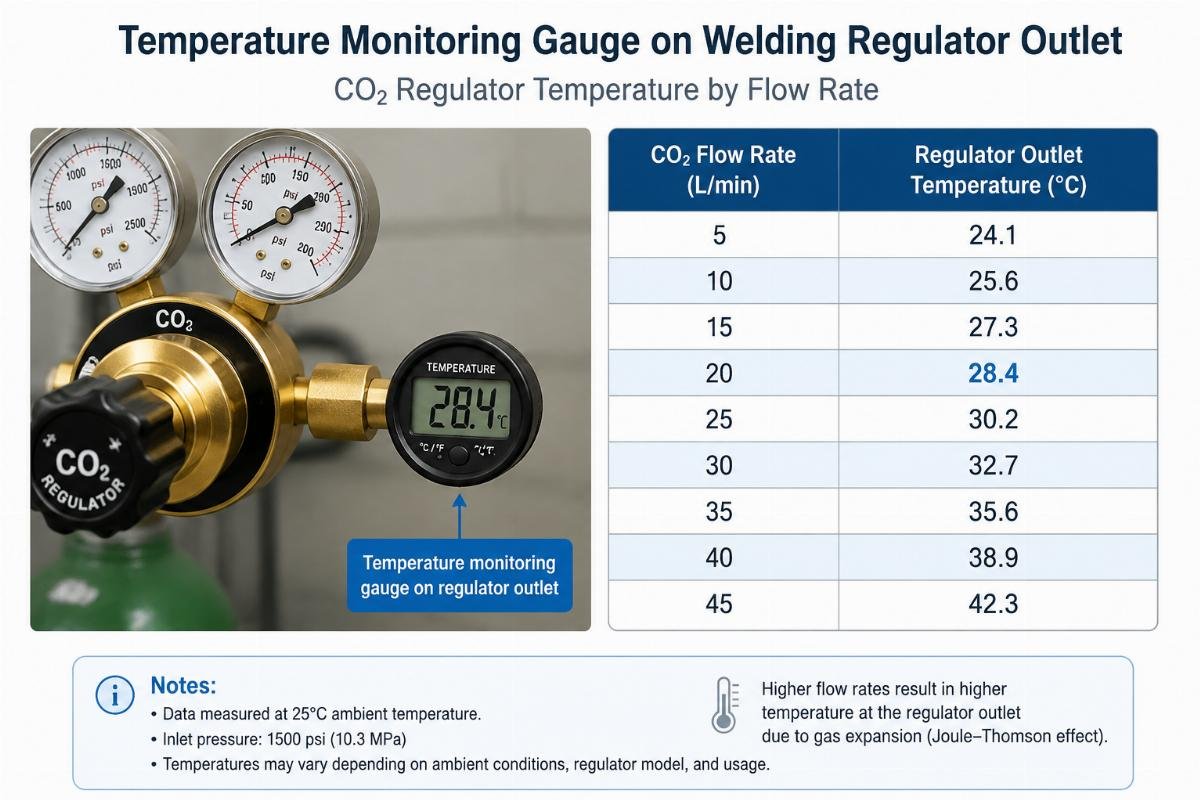
- Flow Rate Mapping – Document your average and peak CO2 flow rates across all production lines to confirm your required heater performance threshold.
- Temperature Baseline – Run a 2-hour continuous flow test at your highest expected usage rate to measure baseline temperature drops without a heater installed.
- Myth Validation – Test a full, freshly filled CO2 cylinder at peak flow to confirm freezing occurs even with maximum cylinder pressure, ruling out low gas as a cause.
What Are the Hidden Costs of Unaddressed Regulator Freezing?
Unresolved regulator freezing creates three layers of hidden cost that are rarely budgeted for in bulk operational planning. Beyond the immediate downtime when a line stops running, repeated ice formation damages internal regulator seals and components, and can create safety hazards from unexpected gas flow disruption mid-weld. The standard formula for calculating these costs is simple: hourly downtime loss = (per station labor cost × downtime duration) + idle capacity loss.
| Cost Category | Common Underestimation | Actual Full Cost for Bulk Operations |
|---|---|---|
| Unplanned Downtime | Only counts direct labor for the affected station | Includes lost production for all dependent downstream stations waiting on the welded component |
| Part Replacement | Only counts the cost of the regulator itself | Includes labor time for on-site technicians to swap parts, plus spare parts inventory holding costs |
| Safety & Compliance | No formal cost allocation | Includes risk of weld defects from inconsistent gas flow, plus potential non-compliance penalties for unexpected equipment failure |
A mid-sized mining support fabrication facility in Brisbane calculated their total freezing-related costs before switching to a purpose-built solution, and found they were losing an average of 1.2 hours of production time per week across 8 active welding stations, adding up to more than $19,000 in avoidable losses per year before they implemented the fix.
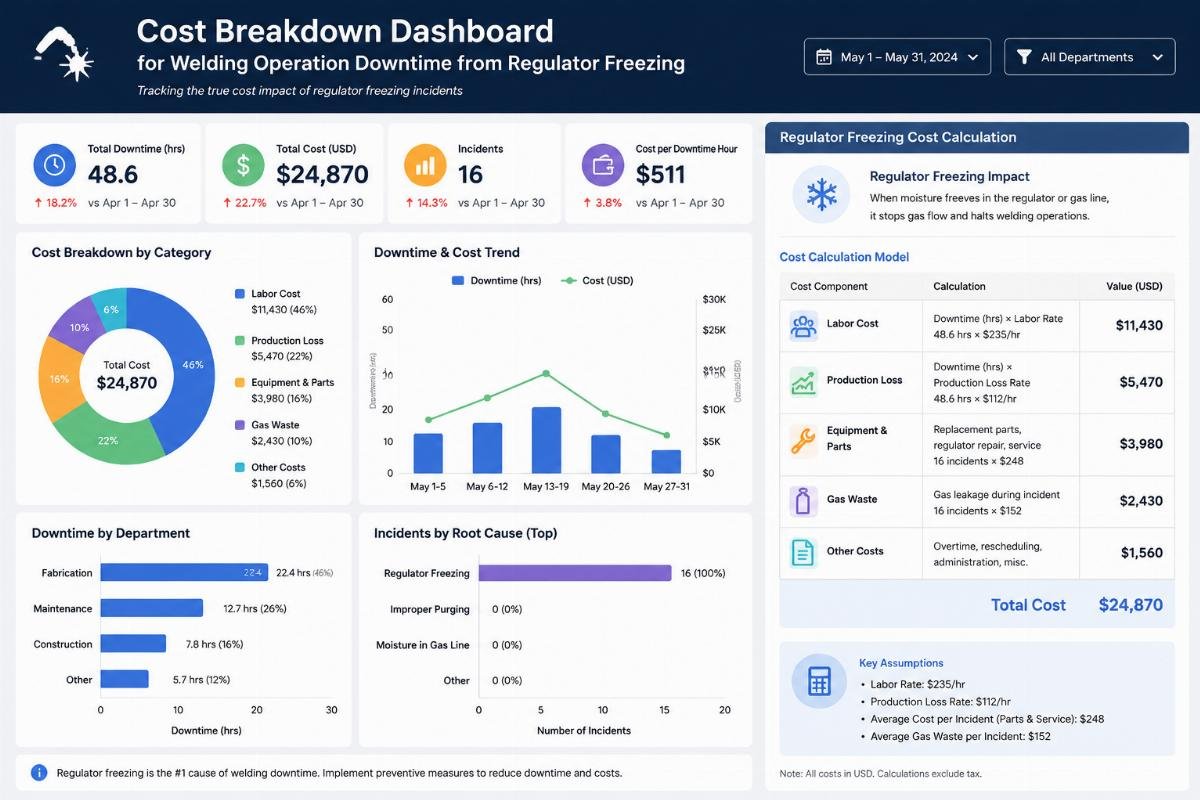
- Downtime Audit – Log all unplanned stops over a 4-week period to count exactly how many hours of production are lost to regulator freezing.
- Part Cost Tally – Add up all regulator replacement and repair costs over the past 12 months to quantify direct component expenses.
- Capacity Calculation – Multiply total lost downtime by your average per-hour production output to calculate the full value of uncompleted work.
Which CO2 Heater Specifications Fit High-Flow Welding Scenarios?
Only purpose-built CO2 heaters rated for 20L/min or higher flow can reliably eliminate freezing in high-flow welding scenarios. Generic, low-cost heaters marketed for general gas use have much lower flow thresholds, and will still fail at flow rates above 15L/min even if they work for occasional low-flow usage.
| Heater Type | Performance Limitation | Suitable Use Case |
|---|---|---|
| Generic low-flow gas heater | Maximum rated flow of 8-10L/min, freezes at flow rates over 12L/min | Hobbyist or light-duty workshop use with no continuous production runs |
| Mid-tier general purpose heater | Rated for 15L/min flow, fails at temperatures below -25°C in continuous operation | Small production teams running occasional peak flow up to 15L/min |
| High-flow welding-specific CO2 heater | Rated for 25L/min or higher flow, operates reliably at temperatures down to -40°C | Bulk production, mining, and infrastructure operations running continuous high-flow CO2 usage [NEED_CITE: High-flow dedicated CO2 heaters maintain regulator temperatures above 5°C even at 30L/min continuous flow rate in -10°C ambient conditions] |
The Melbourne-based procurement team for a large infrastructure project tested three different heater models across their 12 on-site welding stations, and confirmed that only the 25L/min rated dedicated heater eliminated all freezing incidents during 12-hour daily production runs across 6 weeks of field testing.
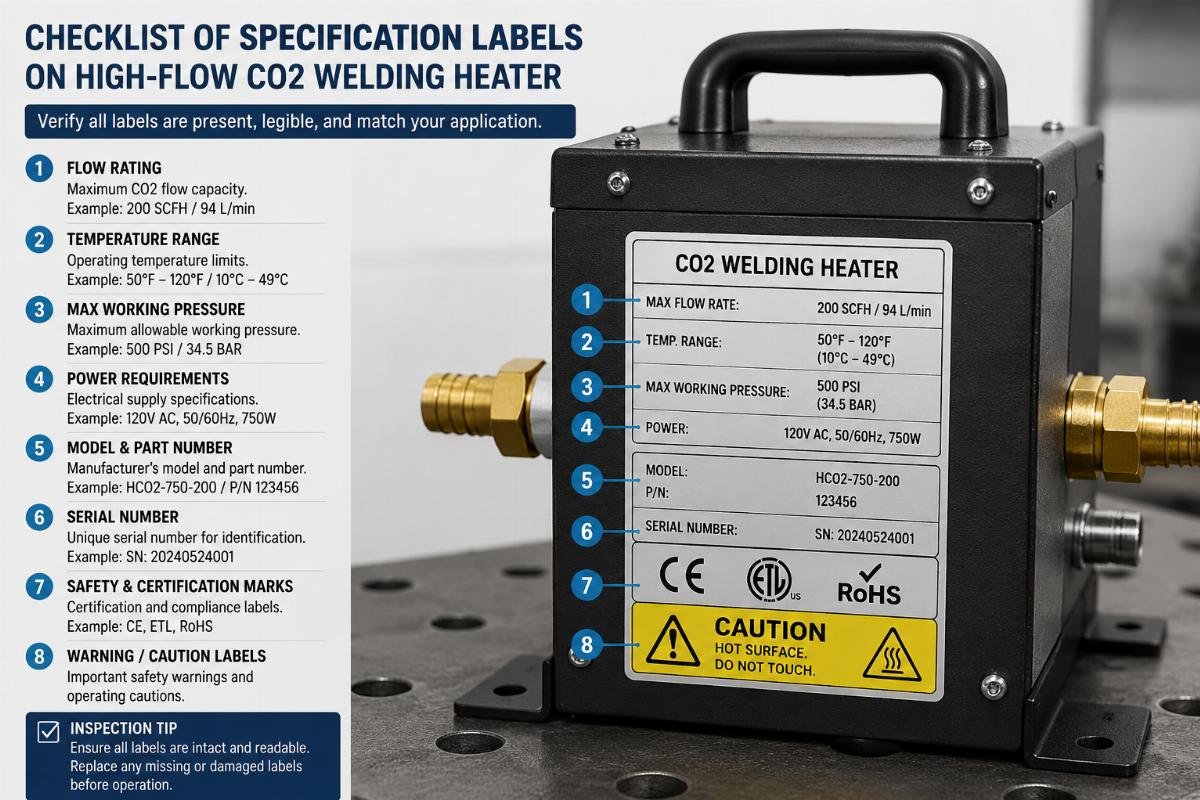
- Flow Threshold Validation – Confirm the heater’s published continuous flow rating is at least 20L/min, not just its intermittent peak rating.
- Temperature Range Check – Verify the heater’s operating range is rated for at least -40°C to cover the maximum expected depressurization temperature drop.
- Interface Compatibility – Confirm the heater fits your existing standard regulator connections without requiring custom adapters that can create additional failure points.
- Safety Rating Confirmation – Select heaters with IP44 or higher防漏电等级 to meet Australian worksite safety standards for industrial use.
How to Source Reliable CO2 Heaters Without Recurring Hidden Fees?
Australian bulk buyers can eliminate long-term recurring costs by sourcing high-flow heaters from local suppliers that offer no-rent CO2 cylinder packages. The most common hidden fee for welding operations is ongoing gas cylinder rental, which can add up to thousands of dollars per year per site, even for teams that already own their own regulator and heater equipment.
| Sourcing Approach | Hidden Recurring Cost | Long-Term Savings Profile |
|---|---|---|
| International bulk import | Long lead times, no local support, warranty repair delays | Low upfront cost, but 20-30% higher total cost over 3 years from downtime and replacement parts |
| Traditional industrial gas supplier | $15-$25 per cylinder per month rental fee, mandatory bundled equipment purchases | Steady pricing, but rental fees accumulate to $3000+ per year for operations using 10+ cylinders |
| Local independent welding equipment supplier with no-rent gas program | No ongoing cylinder rental, transparent bulk pricing for heaters and cylinders | 18-25% lower total cost over 3 years with no recurring hidden fees [NEED_CITE: Australian no-r |
